Spectra Maintenance: Keeping Lasers and Optical Tools Accurate
Author
Ashleigh
Category
Blog
Reading Time
Date Published
27 February, 2026
Get In Touch
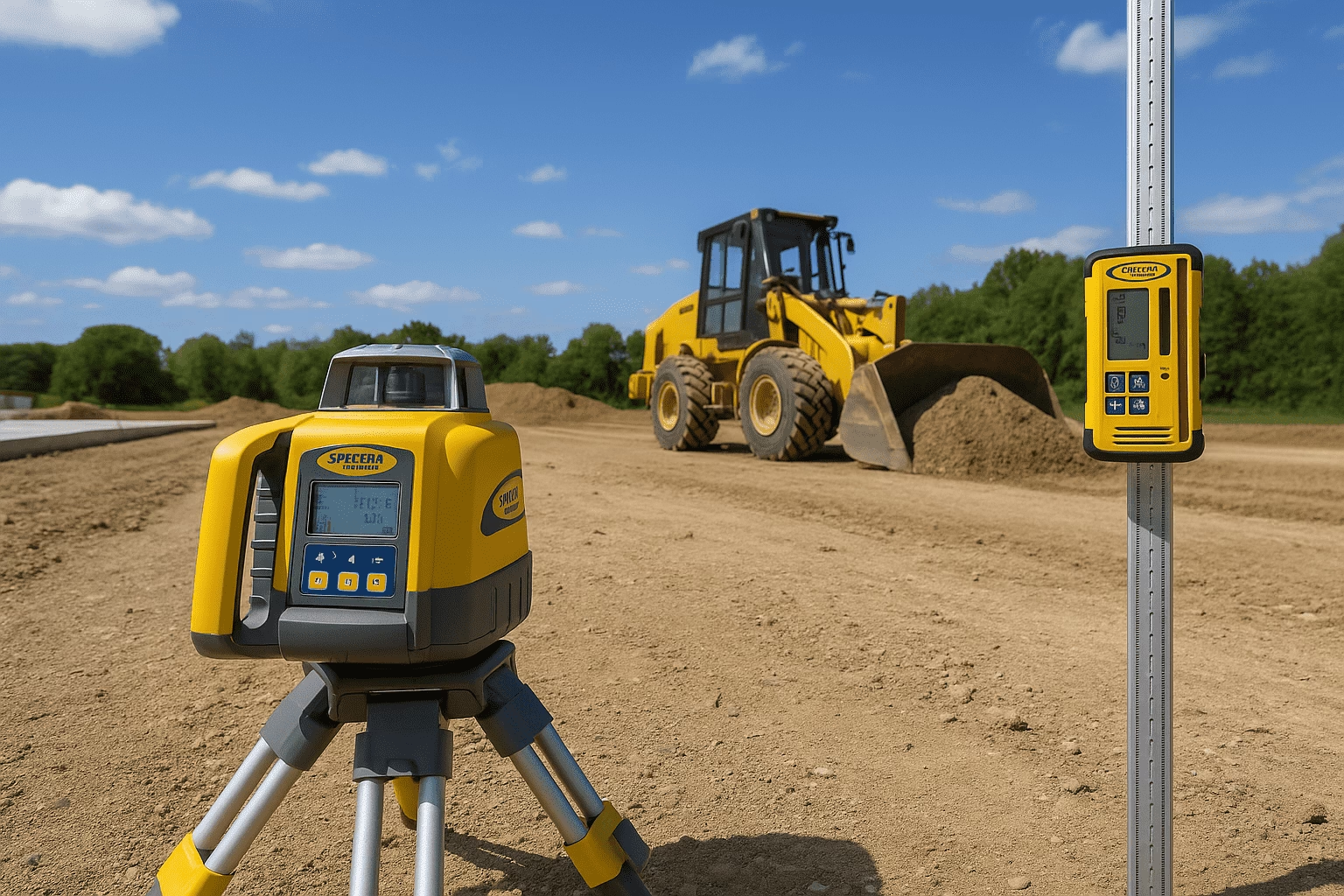
Precision on site does not happen by chance. Even the most advanced laser and optical tools require consistent care to deliver accurate results each day. Spectra instruments are robust, but long-term accuracy relies on regular maintenance.
Spectra maintenance focuses on clear routines. These routines maintain measurement integrity, protect components, and ensure consistent performance over time. It prioritises prevention rather than reacting to failures.
Why Regular Maintenance Matters for Spectra Tools
Bulk material operations depend on consistent measurement. Traditional approaches, such as estimation or weight-only systems, can introduce variability when density changes due to moisture or fragmentation. This can impact dispatch verification and reporting accuracy.
Moving From Estimation to Verified Measurement
Loadscan solutions replace estimation with verified volume data captured seamlessly as vehicles move through site operations. Rather than relying on conversion assumptions, operations gain consistent measurement that reflects real loading conditions.
Supporting Measurable Production Performance
When measurements reflect real site conditions, production reporting becomes more dependable. Accurate load data strengthens dispatch verification, reduces reconciliation discrepancies and improves overall operational transparency. Over time, consistent measurement supports better production forecasting and stronger control across the production cycle.
Improving Accuracy Through Advanced Volume Measurement
Weight-based systems measure mass, but density variation can affect measurement reliability. Laser load-volume scanning technology measures the space occupied by material, providing a stable reference regardless of variations in moisture or material characteristics. Volume data can be combined with verified density factors to estimate tonnage while maintaining measurement transparency. This helps align operational measurement with commercial reporting processes.
Measurement Comparison
Volumetric systems complement existing infrastructure by improving consistency where measurement precision directly influences operational and financial performance.
| Measurement Method | Primary Output | Sensitivity to Density Changes | Operational Flow | Measurement Precision |
|---|---|---|---|---|
| Weighbridge | Weight | High | Requires stop | Moderate |
| Manual Estimation | Approximate volume | Very high | Continuous | Low |
| Laser Volumetric Scanning | Exact volume | Low | Continuous | High |
Applying Loadscan Solutions Across Industries
The flexibility of Loadscan technology allows deployment across mining, quarry and civil construction environments, as well as specialised material-handling sectors such as mulch and forestry operations.
Moving From Estimation to Verified Measurement
In mining, load consistency directly affects productivity and equipment health. Overloading increases tyre and suspension wear, while underloading reduces haul efficiency and output.
The system enables consistent monitoring of payload accuracy with Loadscan mine payload technology, supporting more disciplined loading practices.
Operational value includes:
-
Identifying load variation: Reduces inconsistencies across vehicles and loading practices.
-
Improving fleet utilisation: Supports more balanced and efficient haul cycles.
-
Reducing hidden production losses: Minimises underloading and uneven load distribution.
-
Strengthening production alignment: Helps loading stay consistent with production targets.
Accurate load measurement improves both operational efficiency and cost stability.
Quarry: Strengthening Dispatch Integrity
Quarry operations depend on precise measurement to maintain contractual accuracy and customer trust. Quarry load measurement systems provide consistent load verification, helping operations accurately track delivered volumes and stockpile movement.
Operational benefits include:
-
Ensuring clear load documentation: Provides consistent and traceable load records.
-
Reducing reconciliation disputes: Limits discrepancies between dispatched and delivered volumes.
-
Improving stockpile visibility: Gives clearer insight into material movement.
-
Supporting supply confidence: Strengthens confidence in reported delivery volumes.
Accurate measurement strengthens both operational credibility and commercial relationships.
Civil Construction: Enhancing Material Tracking
Large infrastructure and earthworks projects depend on accurate material tracking using Loadscan civil construction solutions to maintain control over haul volumes and overall project progress.
This supports:
-
Monitoring earthworks progress: Tracks material movement more accurately.
-
Evaluating subcontractor performance: Provides clearer visibility into haul productivity.
-
Aligning cost with production: Improves visibility between output and cost.
-
Improving schedule control: Supports more predictable project planning.
Reliable measurement helps coordinate multiple project stakeholders with greater confidence.
Moving From Measurement to Operational Control With Loadscan Technology
Measurement becomes far more valuable when it informs operational decisions rather than serving as a reporting checkpoint. In high-volume environments, clarity around load movement improves performance throughout the production cycle.
Creating Clear Production Visibility
When volumetric scanning integrates with fleet and reporting systems, operations gain consistent visibility into daily material movement. Production teams can compare planned and actual haul volumes and identify small deviations before they affect output.
Strengthening Consistency Across Fleets and Shifts
Inconsistent loading often occurs gradually across operators, vehicles or shifts. Without reliable measurement, these variations may go unnoticed. Verified volume data creates a stable reference across fleets, reducing variability and supporting more disciplined loading practices.
Supporting Data-Driven Site Performance
When reporting reflects real material movement, reconciliation becomes more straightforward, and performance discussions are based on verified data rather than estimates. By capturing the true three-dimensional load profile, Loadscan solutions help operations move toward more predictable and data-informed production environments.
Integrating Loadscan Into Site Operations
Implementing Loadscan solutions begins with understanding how the system fits into existing site operations. Alignment with haul routes, traffic flow and reporting needs helps ensure the scanning process runs smoothly without interrupting production. Because load volume scanners operate in motion, vehicles can pass beneath the scan head without stopping. This preserves throughput and allows measurement to take place naturally within daily operations.
Integrating Measurement Into Daily Operations
For volumetric measurement to deliver full value, the data must support real operational workflows. Volume information can integrate with existing reporting systems, helping teams track production movement and maintain clearer operational visibility. With thoughtful setup and integration, the system provides consistent, auditable measurements that support long-term clarity in production without disrupting site performance.
Frequently Asked Questions
To help clarify how volumetric scanning works in practice, we’ve answered some of the most common questions about accuracy, integration and operational impact below.
Measure With Confidence and Keep Your Operations on Track
When you can trust your load measurements, everything runs more smoothly – from daily reporting to overall production performance. Accurate, consistent data helps you reduce uncertainty, avoid costly discrepancies and make better decisions on the ground.
Partner with SITECH SA to see how more accurate measurement can simplify your operations and give you greater control.
Need to get in touch with us?
Complete the form and a member of our team will be in touch.
Alternatively, you can contact any of our regional offices directly using the details below.
Request a Quotation
Please complete the form and a SITECH SA representative will contact you to assist.