Construction Technology in Civil Projects: Driving Accuracy and Efficiency

Author
Gregory Haralambous
Category
Blog
Reading Time
4 Minutes
Date Published
29 May, 2026
Get In Touch
Precision in execution shapes project outcomes from the start. Even minor misalignments can affect timelines and cost, making control at each stage progressively more difficult to maintain.
To improve consistency in site operations and fieldwork, many teams are turning to construction technology solutions that enable more integrated workflows. The shift becomes clearer when we look at how these systems are applied in civil projects.
Common Challenges in Traditional Civil Workflows
Traditional civil workflows often create inconsistencies between site teams and field activity. As projects become more complex, maintaining consistency at each stage becomes increasingly difficult. Even minor information gaps can affect how smoothly work progresses on site.
Common challenges include:
-
Inconsistent site performance: Variations between operators can affect consistency.
-
Delayed decisions: Information is not always available when needed.
-
Site corrections and material waste: Errors require correction and additional resources.
-
Communication gaps: Teams work from different or outdated information.
-
Workflow inefficiencies: Repetitive processes slow down progress.
Comparing Traditional and Connected Construction Workflows
The difference between traditional methods and technology-driven systems becomes clearer when you compare how information moves, how teams access data and how rapidly vital site decisions can be made.
These differences show how integrated systems make site activity easier to manage:
| Aspect | Traditional Approach | With Construction Technology |
|---|---|---|
| Data Flow | Fragmented and manual | Continuous and integrated |
| Layout Consistency | Based on interpretation | Directed by precise inputs |
| Workflow Continuity | More interruptions | Improved operational flow |
| Correction Levels | Frequent adjustments needed | Fewer on-site corrections |
| Progress Tracking | Limited oversight | Real-time insight |
Key Components of Modern Construction Technology
Civil operations depend on hardware and software working together to support accurate field execution. Integrated construction solutions connect design data to field activities, enabling site operations to work from the same information throughout the delivery process. This helps improve coordination and reduce manual gaps, ensuring that daily operations are correctly aligned.
Each component supports a different part of the process:
-
Digital workflows: Link project data between design, reporting and field operations.
-
Connected equipment: Enables machines to receive and share live information.
-
Machine control systems: Guide equipment using digital models through advanced machine control solutions.
-
GNSS positioning tools: Provide accurate location data for layout using GNSS (Global Navigation Satellite System) systems.
-
Site automation: Uses digital models to guide tasks more consistently.
How Digital Workflows and Connected Equipment Improve Site Performance
Once construction technology systems are in place, teams can guide and measure field work with clearer oversight. Live site data helps maintain continuity by reducing interruptions and limiting delayed updates. With these measures in place, making changes becomes easier.
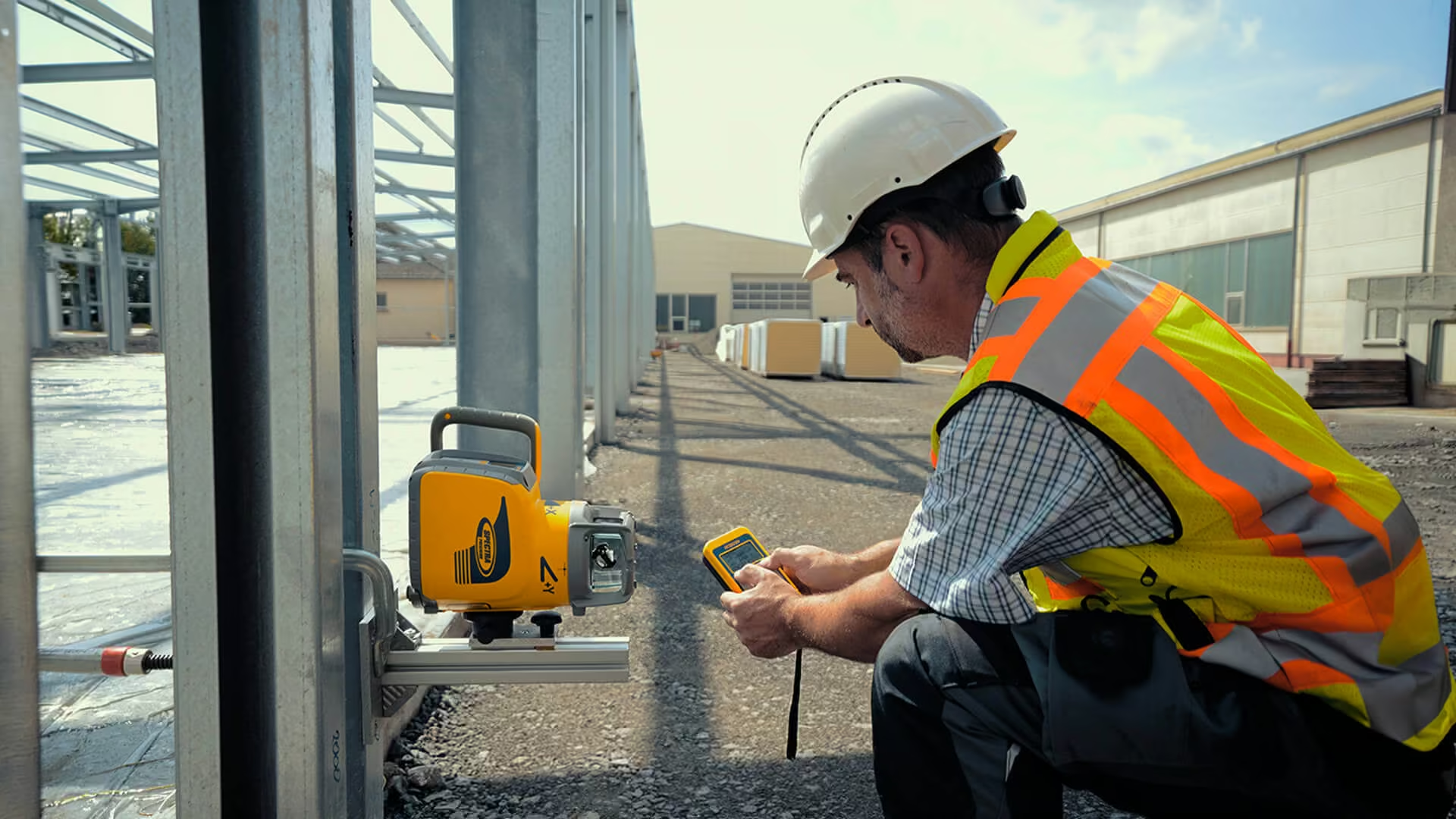
1. Keeping Teams Aligned With Shared Site Data
Plans and data become working references. As changes occur, updates move directly into the workflow so everyone works from the same reference. Platforms such as Trimble Connect support this by linking site and field data in real time as changes occur.
2. Using Operational Data to Guide Equipment
Connected systems allow machines to respond directly to digital inputs. Operators follow system instructions while supervisors track momentum remotely. Technologies such as Trimble Earthworks make this possible by enabling machines to follow data more consistently.
3. Making Decisions With Real-Time Visibility
Real-time monitoring helps identify issues earlier, making it easier to adjust site activity before problems escalate.
This approach leads to measurable improvements in the field:
-
Improved coordination: Consistent data supports day-to-day operations.
-
Greater efficiency: Automated processes minimise delays and manual limitations.
-
Improved site accuracy: Layout tools help maintain more accurate work on-site.
-
More reliable outcomes: Tasks are completed correctly from the start.
-
Earlier issue detection: Live project data helps identify changes before they begin affecting site activity.
4. Improving Site Accuracy With Connected Workflows
Layout and guidance tools help maintain more accurate work on site by keeping field activity aligned to site information throughout delivery. GNSS receivers and site positioning systems enable precise layout and verification, while Trimble Siteworks machine guidance solutions help maintain more reliable site measurements.
5. Improving Workflow Continuity
Connected workflows help maintain continuity between operational updates and site activity throughout the work. Earlier responses allow changes to be managed before they begin affecting timelines and productivity.
6. Protecting Margins Through Better Workflow Control
Better oversight into quantities, placement and site activity helps strengthen cost management while limiting unnecessary resource use and corrective work.
Explore Construction Technology Solutions With SITECH SA
Connected construction workflows help bring planning, site operations and project information together in a more streamlined way. With faster access to site data and clearer operational insight, teams can respond more efficiently, helping site operations remain aligned.
Speak to the SITECH SA team about solutions tailored to your operational requirements and site goals.
Need to get in touch with us?
Complete the form and a member of our team will be in touch.
Alternatively, you can contact any of our regional offices directly using the details below.
Request a Quotation
Please complete the form and a SITECH SA representative will contact you to assist.