Spectra vs Trimble: Choosing the Right Layout Technology

Author
Ashleigh
Category
Blog
Reading Time
4 Minutes
Date Published
27 April, 2026
Get In Touch
On-site accuracy shapes everything from timelines to material use. When comparing Spectra vs Trimble technologies, the decision often comes down to how layout data is captured and used on-site. Both systems support precise work, but they approach it in very different ways.
Knowing how each tool aligns with specific project needs is essential. Teams achieve the best results by matching technology strengths to on-site challenges, rather than defaulting to a single method for all tasks.
Understanding the Core Difference: GNSS vs Optical
At a high level, this comparison comes down to positioning methods.
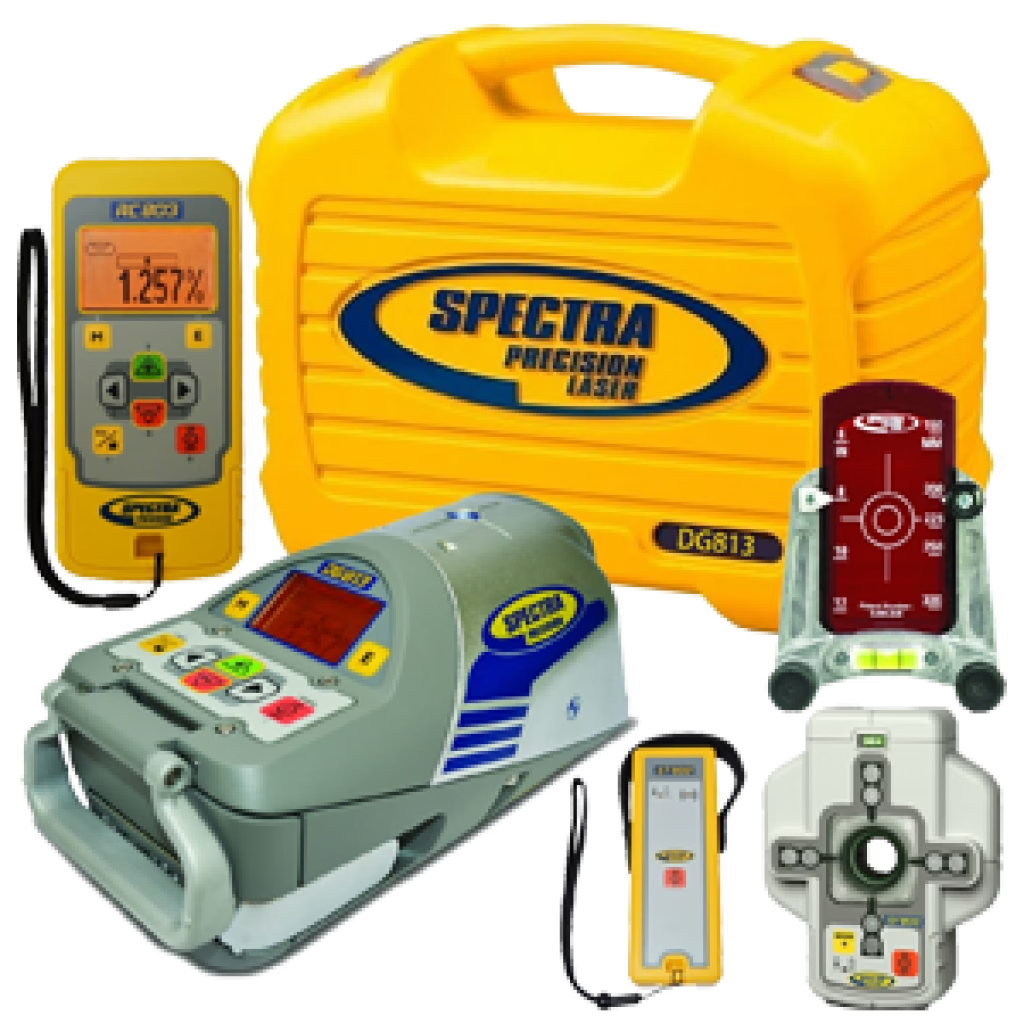
The Spectra Precision range relies on optical and laser-based systems. These are designed for consistent reference points, often used in controlled environments where visibility and line of sight can be maintained.
Trimble relies on GNSS (Global Navigation Satellite System), using real-time satellite data instead of fixed control points to determine positions across larger areas.
This distinction shapes how each solution performs on site, especially when conditions shift or scale increases.
How Spectra Laser Technology Performs On-Site
Laser tools support grading and maintain stable site levels, giving operators a reliable working plane.
On-site, this translates into:
Laser systems work particularly well on indoor projects and smaller sites, where consistent grading is required.
How Trimble GNSS Technology Supports Layout and Grading
-
Strong accuracy within a defined working range
-
Simple setup with minimal calibration once established
-
Reliable performance in controlled or clearly defined areas
-
Limitations where line-of-sight is obstructed or terrain shifts
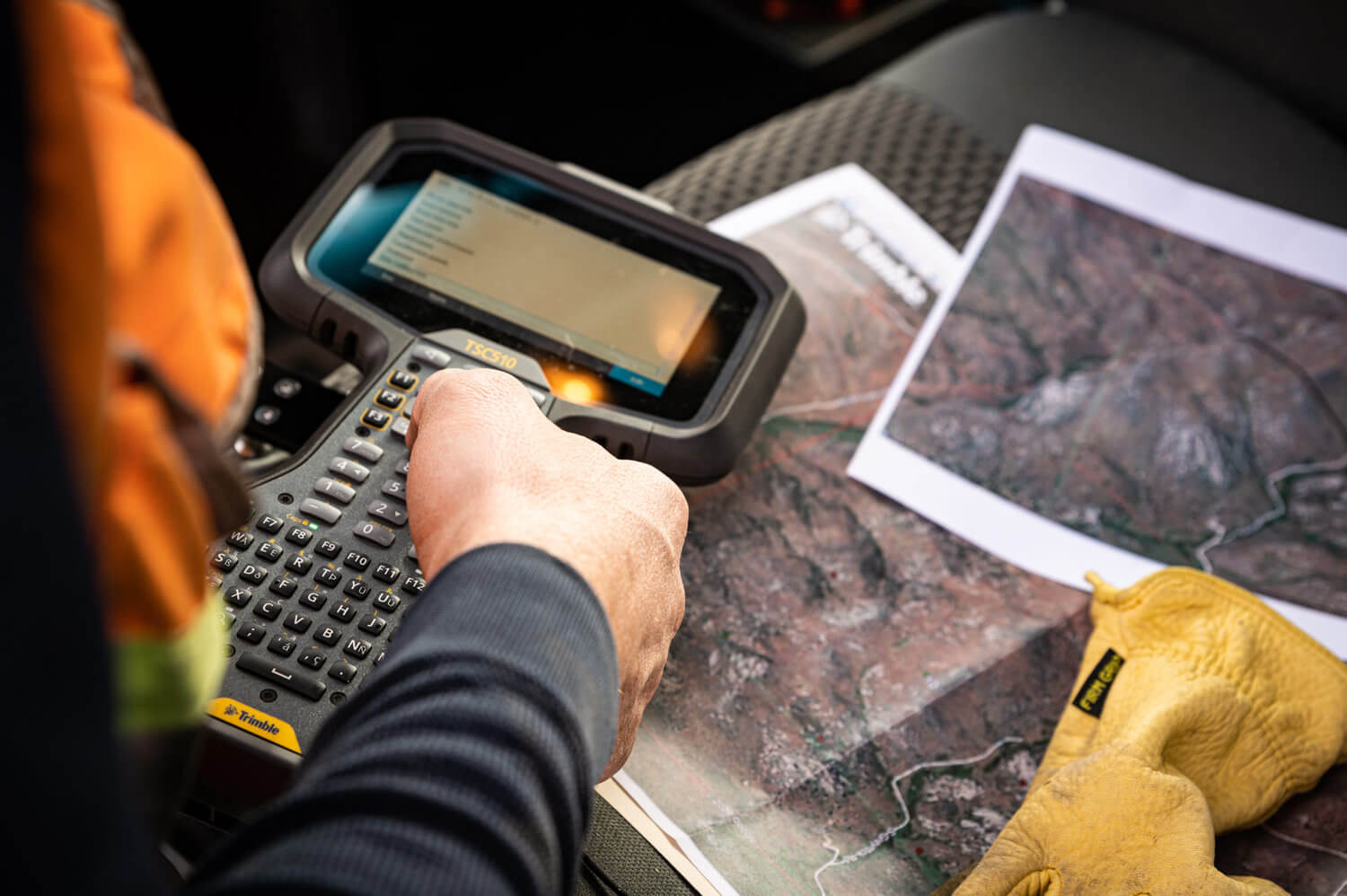
Satellite-based systems approach layout from a different angle, as seen across the Trimble Technology range. Instead of working from a fixed point, they position equipment relative to satellite data and digital design models.
This allows teams to work across the site without having to reset equipment. Layout points can be positioned directly from digital plans, reducing the need for manual marking.
The strength of these systems lies in flexibility. As designs change, updates can be applied across the site without rebuilding physical setups.
Accuracy depends on correction signals and calibration quality, but when configured correctly, GNSS delivers consistent results across wide or complex environments.
Spectra vs Trimble: Real-World Layout Comparison
When looking at Spectra vs Trimble in practice, the differences become clearer through how teams work on-site.
Laser-based systems:
-
Support controlled, repeatable workflows
-
Perform best in stable, clearly defined environments
Satellite-based (GNSS) systems:
-
Support dynamic operations as layouts change
-
Scale effectively across larger or expanding sites
This often aligns with the type of project, from smaller contractor-led sites to large-scale infrastructure work.
Construction Accuracy: What Really Matters
Precision is often seen as the deciding factor, but both systems can deliver strong results when used correctly. With optical tools, performance is tied to setup and environmental control. Once established, they provide reliable consistency within their working range.
Satellite positioning depends on signal and calibration, aided by correction services. With these, accuracy holds over large areas. The key difference is how precision is maintained. One relies on fixed reference points, while the other uses continuous positioning data.
When Each Technology Makes More Sense
There are clear scenarios where one approach fits better than the other.
The table highlights how each approach fits different site conditions, making it easier to match the technology to the task at hand.
| Scenario | Spectra (Laser-Based) | Trimble (GNSS-Based) |
|---|---|---|
| Site Size | Best for contained areas | Designed for large-scale sites |
| Layout Changes | Works best in stable environments | Handles frequent design changes well |
| Setup | Simple and quick to establish | Requires more initial configuration |
| Line of Sight | Requires clear visibility | Not limited by line of sight |
| Workflow | Supports repeatable tasks | Better suited to changing work conditions |
In some cases, the decision also comes down to balancing cost with capability, depending on the level of precision and integration required.
When Is GNSS Better Than a Laser Tool?
GNSS becomes the stronger option when projects need to adapt as work progresses. On larger sites, maintaining a laser setup can become impractical. GNSS systems remove this constraint by enabling positioning across the site without relying on a fixed setup. They also reduce manual layout, allowing teams to work directly from digital models and speeding up transfers. For frequent design updates, digital systems apply changes quickly without resetting physical markers. This also allows for closer integration with digital construction workflows, where layout is directly linked to design data. That said, laser-based tools remain highly effective on contained sites where work is consistent and conditions are controlled.
Get Expert Advice From SITECH SA
Choosing between Spectra vs Trimble solutions is less about the technology itself and more about what your site needs day to day, from site size and layout changes to the level of integration with digital models.
In practice, many projects benefit from using both approaches at different stages as the site develops.
If you’re weighing up your options to find the ideal setup for your site, the SITECH SA team can help you make a confident call. Contact us today.
Need to get in touch with us?
Complete the form and a member of our team will be in touch.
Alternatively, you can contact any of our regional offices directly using the details below.
Request a Quotation
Please complete the form and a SITECH SA representative will contact you to assist.