How Surveying Technology is Being Reinvented by Automation
Author
Ashleigh
Category
Blog
Reading Time
4 Minutes
Date Published
30 May, 2025
Get In Touch
Surveying has always played a foundational role in construction, setting the stage for everything from site layout to project completion. As part of the wider shift toward smarter construction practices, it’s important to consider how automation is transforming the industry as a whole – including surveying. You can explore more about this broader transformation in our feature on how automation is transforming construction in 2025. As technology evolves, the traditional methods of surveying are being replaced with faster, smarter, and more precise tools. Today, automated surveying technology is transforming the surveying process – redefining what it means to collect and use data on a construction site.
Automated surveying tools are not only reducing manual labour but also improving safety, increasing accuracy and shortening timelines. From real-time data collection in the field to seamless integration with office software, the shift to smarter systems is well underway. Here’s how modern automated surveying technology is reinventing the world of surveying and why forward-thinking construction teams are embracing it.
Moving Beyond Manual: The Shift to Automated Workflows
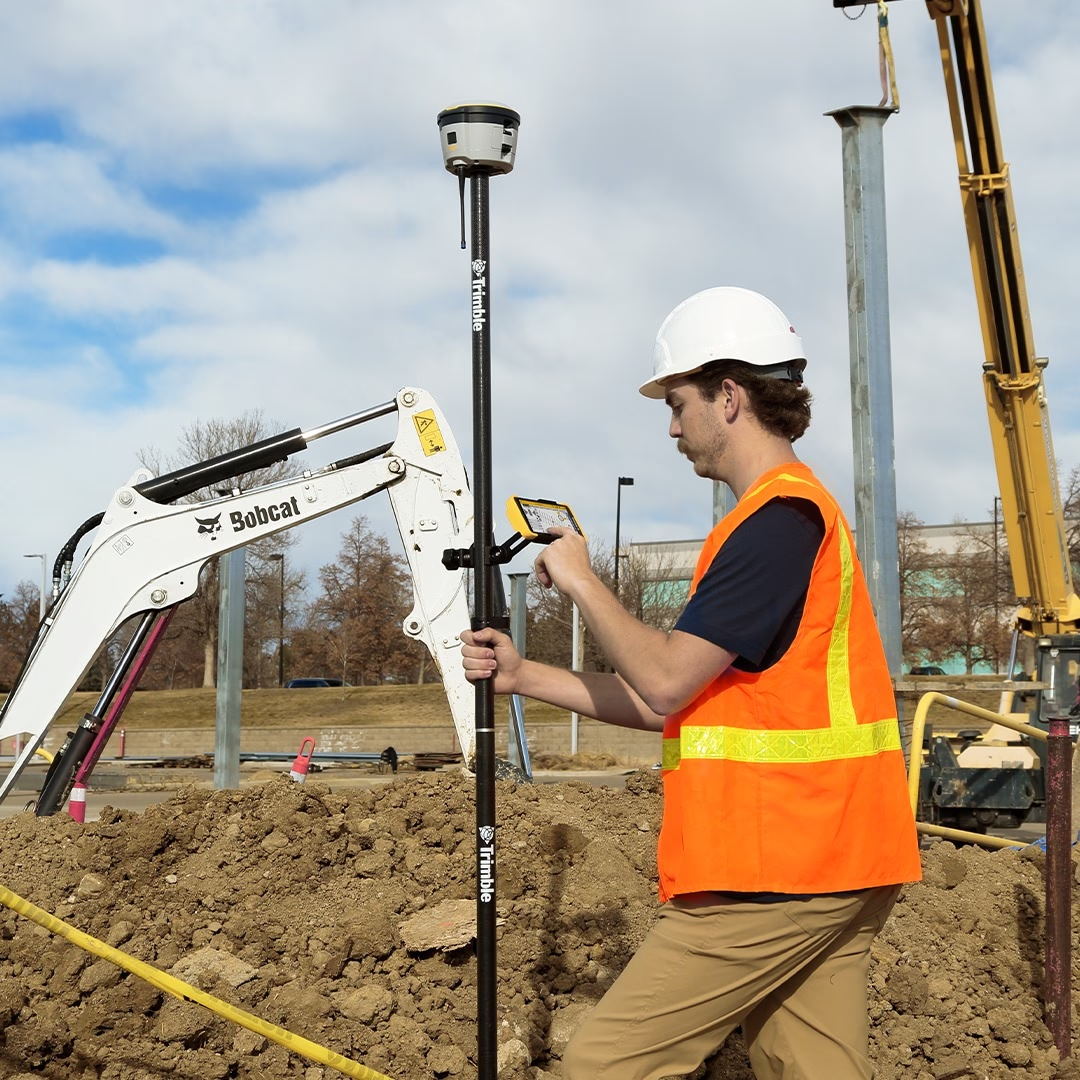
Manual surveying once involved labour-intensive tools such as measuring tapes, levels and theodolites. These methods, while reliable in their time, are no longer fast or accurate enough to meet today’s project demands. Modern surveying workflows now incorporate automation through robotic total stations and GNSS systems that dramatically reduce the need for manual effort.
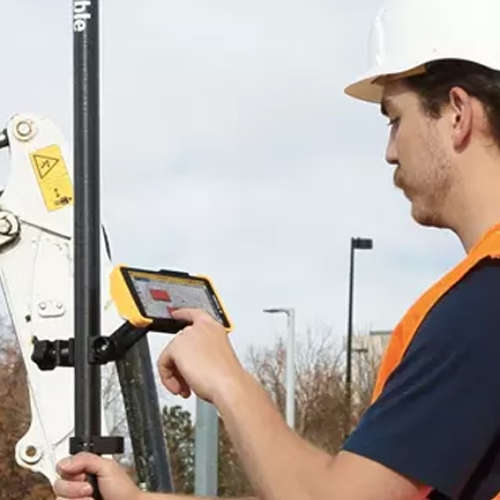
Field devices like the Trimble TDC6 allow for rapid and accurate data collection even in rugged terrain. Surveyors can capture position, elevation and other measurements digitally and in real time. Automated surveying technology can lock onto targets, follow operators, and record precise measurements without interruption.
Key Benefit: Increased speed and precision with minimal manual input.
Real-Time Connectivity: Data That Flows Seamlessly
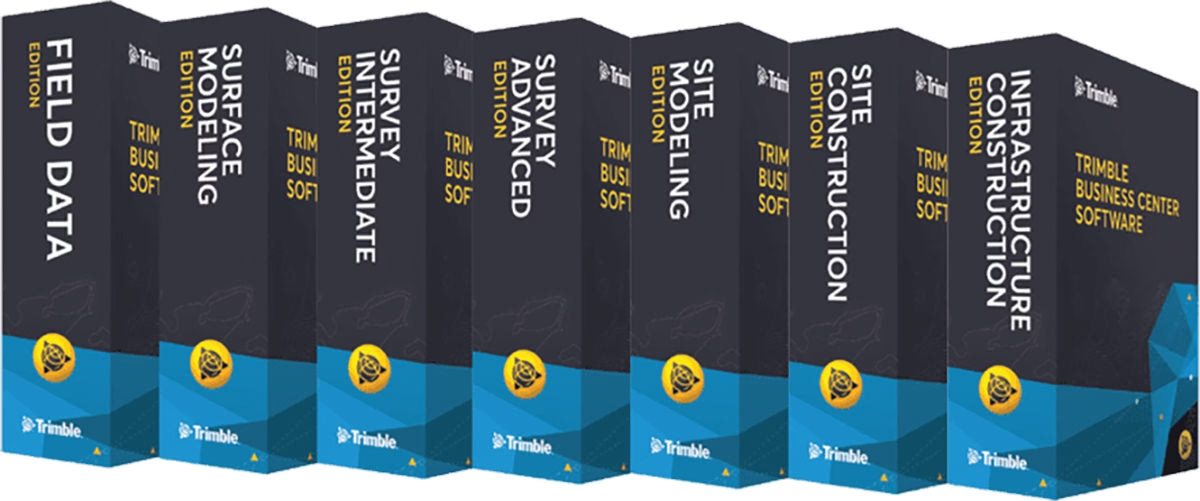
The real power of automated surveying technology lies in its integration with broader construction ecosystems. Using cloud-connected tools, survey data collected on-site can be shared instantly with office teams through platforms like Trimble Business Center.
This real-time syncing ensures immediate access to current conditions, allowing engineers to make data-backed decisions without needing to visit the site. It also means fewer emails, fewer delays and fewer inconsistencies in project plans.
Key Benefit: Improved collaboration between field and office for faster, more accurate decision-making.
Accuracy at Scale: Reducing Rework with Automation
Human error in surveying can result in misaligned foundations, elevation mistakes, and costly rework. Automated surveying technology reduce these risks by maintaining consistent accuracy throughout the data collection and processing stages.
With GNSS receivers, robotic total stations, and devices like the TDC6, construction teams can capture sub-centimetre accuracy across large areas – ensuring that designs translate flawlessly from plans to the real world.
Key Benefit: Fewer delays and reduced costs due to highly accurate data.
Enhanced Safety and Accessibility in the Field
Surveyors often operate in challenging or dangerous environments – near active machinery, on unstable ground, or in extreme weather. Automated surveying technology significantly reduces these risks by limiting the need for close-range interaction with dangerous conditions.
Devices such as the Trimble TDC6 can be operated from a distance, and autonomous tools can collect data in areas that would otherwise be hazardous or inaccessible. This results in fewer injuries and increased productivity.
Key Benefit: Enhanced safety and access to hard-to-reach or high-risk areas.
Digital Workflows for Smarter Site Planning
Automated surveying doesn’t stop at data collection. When data from tools like the TDC6 is imported into Trimble Business Center, it becomes a powerful planning asset. Engineers can create 3D site models, perform calculations, and assess site conditions without needing additional site visits.
Digital workflows also make it easier to revise and reshare plans. When ground conditions change, updated site data can be collected and used to refine designs in hours instead of days.
Key Benefit: Greater agility and accuracy in construction planning and execution.
Better Documentation and Compliance Tracking
Automated surveying technology allow survey data to be documented and archived more effectively. Each measurement, change, or observation can be automatically timestamped and stored for future reference, ensuring auditability and compliance with industry standards.
When government agencies, clients, or internal teams require documentation, your digital archive of surveys provides an instant and verifiable record of how a project was executed.
Key Benefit: Clear, reliable records for quality assurance and regulatory compliance.

Supporting Smarter Decisions with Better Data
The consistency and reliability of automated surveying technology produce clean, trustworthy datasets. When this information flows into Trimble Business Center, it powers better forecasting, more efficient scheduling and proactive issue resolution.
Automation turns surveying from a static task into a dynamic, data-driven process that supports long-term project success.
Key Benefit: Enhanced visibility and control over project performance.
The Future of Automated Surveying Technology
Surveying is no longer confined to theodolites and field notebooks. With automation, smart devices and cloud-connected platforms, it’s becoming a high-tech, high-efficiency part of the construction process. Tools like the Trimble TDC6 and Trimble Business Center are at the forefront of this evolution, enabling surveyors to collect more accurate data in less time, with fewer risks. As automated surveying technology becomes more widespread, surveying will continue to evolve – becoming faster, safer and more strategic.
Need to get in touch with us?
Complete the form and a member of our team will be in touch.
Alternatively, you can contact any of our regional offices directly using the details below.
Request a Quotation
Please complete the form and a SITECH SA representative will contact you to assist.